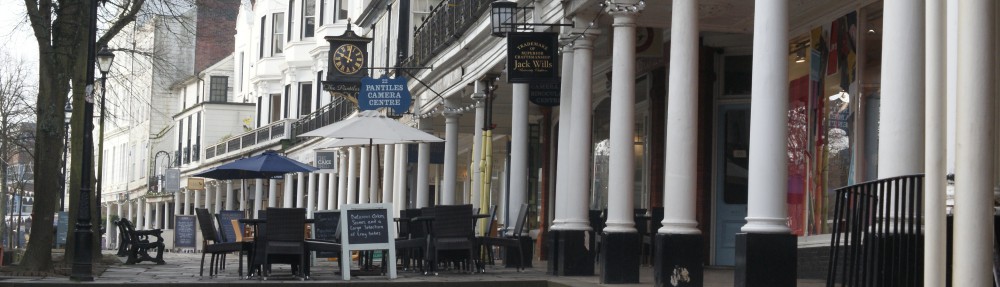
Early on an autumn evening in 1768, a crowd gathers outside a large house on Mount Ephraim. Behind them open heathland extends down towards the wells and the shops, coffee houses and taverns beside them. However, all eyes are fixed on the house’s front door. Eventually it opens and two nervous-looking young men emerge, ushered out by a stern lady in a lace cap.
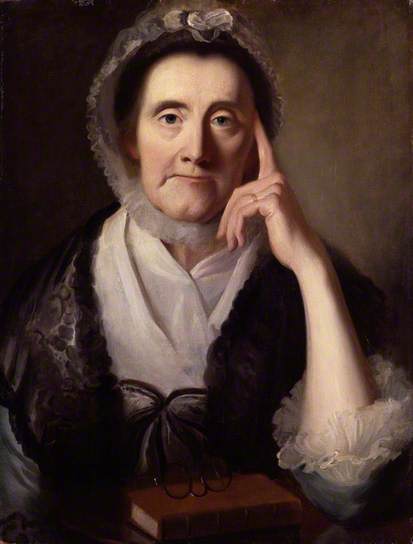 The formidable Selina Countess of Huntingdon, a wealthy widow who had founded her own branch of the Methodist church, was on a mission to convert the heathen in spa towns such as Bath, Brighton and Tunbridge Wells. Visitors came to these fashionable watering places for a good time as much as for health reasons (if not more) and there were plenty of activities for a lady with strict views to disapprove of. In Tunbridge Wells these included horse racing, cards, dancing and gaming, as well as the general ‘unrestrained gayeties’.
Colbran’s ‘New Guide for Tunbridge Wells’ (published in 1840) said of Selina:
‘She was rather above the middle size; her presence noble, and commanding respect; her address singularly engaging; her intelligence acute; her diligence indefatigable…..During forty-five years of widowhood, she devoted time, talents, and property to the support of the diffusion of the gospel’.
In the summer of 1763 the Countess had visited the town, accompanied by a Mr Venn who preached to a crowd of several thousand drawn from all classes, in the open air outside the Presbyterian meeting house on Mount Sion. (Open air preaching seems to have been a new phenomenon in the town and the event generated a great deal of interest). As Mr Venn spoke on the words ‘Come unto me, all ye that are heavy laden’ a man standing close by cried out and dropped down dead. This caused a general sensation and provided a ‘heaven sent’ opportunity for the preacher, who exhorted his audience to seek the lord while he was to be found. The Countess observed that ‘many were melted to tears and seemed resolved to fly from the wrath to come’.
Five years later the Countess leased Culverden House on Mount Ephraim (at a site that would later be occupied by the Kent & Sussex Hospital). Mr Shipman and Mr Matthews, the two young men in her doorway that autumn day, were students who had been expelled from Oxford University (for ‘leanings towards Methodism’) and who hoped to study at the theological college she had set up in Wales. Thinking that preaching experience would be useful for them (neither had preached a sermon before) she sent word round, assembled a crowd and, without any advance warning, opened the door and pushed the two men forward. Shipman rose to the challenge (even managing to make a convert), whilst Matthews (rather understandably) was more diffident.
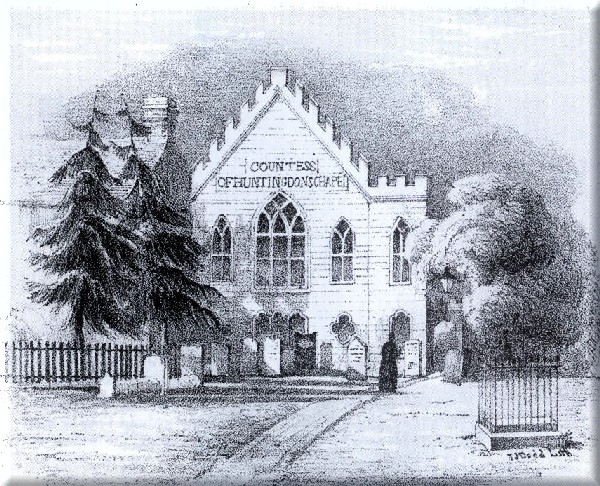 The following year the Countess had a chapel built beside her house. Early one morning another large crowd gathered for the dedication. They sang hymns and said prayers until the time arrived for the service. The doors of the weather-boarded and tiled building, were opened and the place was quickly packed out. After the service had been read they moved outside and George Whitefield, the well-known Methodist preacher, addressed the thousands who had gathered. By this time he was frail and elderly. However, according to a later account, despite being ‘infirm, asthmatic, corpulent’ he ‘thrilled the vast congregation, riveting the eye, piercing the conscience and holding strong men breathless before the resistless might of his oratory’.

Memorial to the opening of the Countess of Huntingdon’s Chapel
The Countess, like many evangelicals at the time, believed the end of the world was approaching, which gave urgency to her endeavours. Almost 250 years later, it hasn’t happened yet. If she was in Tunbridge Wells today, she would no doubt still think there were plenty of ignorant and profane people to save!

 Tunbridge Tales